
Plymouth OUI Lawyer
Strategic OUI defense for Plymouth residents and anyone arrested in Plymouth or on the Route 3 corridor. Attorney Adela Aprodu represents clients in Plymouth District Court — first-offense 24D, breath test challenges, refusal suspensions, and RMV implied-consent hearings.
OUI Defense in Plymouth, MA
A Plymouth OUI arrest typically begins on Route 3, Route 44, or Route 3A, where Plymouth Police and Massachusetts State Police make most stops. The case lands in Plymouth District Court at 52 Obery Street for misdemeanor first or second offenses; felony charges — third or subsequent offenses or OUI causing serious bodily injury (M.G.L. c. 90 § 24L) — also begin in Plymouth District Court, though the Commonwealth may indict the most serious offenses, such as OUI manslaughter (§ 24G), to Plymouth County Superior Court.
A Massachusetts OUI arrest creates two parallel problems: a criminal case in court and an administrative license suspension at the Registry of Motor Vehicles. The two tracks proceed independently, and the RMV implied-consent suspension begins immediately upon refusal regardless of the criminal case outcome. Attorney Adela Aprodu handles both tracks from the first call — the 15-day RMV hearing window closes quickly, and missing it forfeits the suspension challenge.
- First Offense OUI — up to 2.5 years HOC, $500–$5,000 fines, 1-year license suspension; 24D disposition typically reduces the suspension to 45–90 days
- Second Offense OUI — 60 days to 2.5 years HOC (30-day mandatory minimum), $600–$10,000, 2-year suspension; Cahill disposition available with 7+ years between offenses
- Third Offense OUI — felony; 180 days to 5 years state prison, 8-year suspension; indictment to Plymouth County Superior Court
- OUI with Serious Bodily Injury — felony; up to 10 years state prison under § 24L
- OUI Manslaughter — felony; up to 15 years state prison plus 15-year minimum license loss under § 24G
- Breathalyzer Refusal — 180-day suspension first refusal, 3 years second, 5 years third, lifetime fourth — 15-day RMV hearing request critical
About the Court — Where Plymouth OUI Cases Are Heard
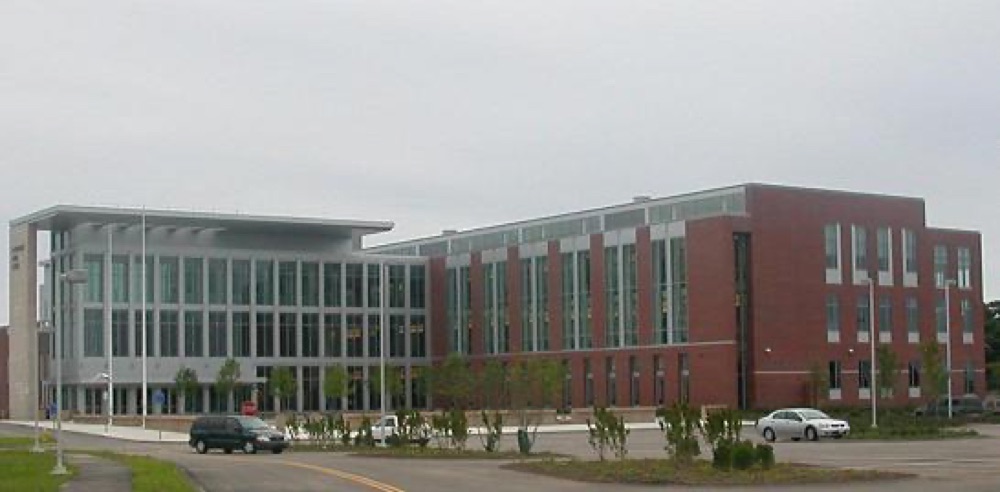
Plymouth OUI cases are heard at Plymouth District Court, at 52 Obery Street in Plymouth County. First and second-offense OUIs are handled here from arraignment through trial; the most serious felony cases can be indicted to Plymouth County Superior Court.
Attorney Adela Aprodu defends OUI cases across Massachusetts, including in the Plymouth County courts — from arraignment and pretrial conferences to suppression hearings and trial. That local knowledge of the courthouse and its prosecutors shapes the strategy from the first appearance.
Plymouth OUI Stop Locations and Arresting Agencies
- Route 3 and the highways — many Plymouth OUIs are Massachusetts State Police stops on Route 3 and connecting routes. MSP report formats, instruments, and supervisory chains differ from local PD
- Court Street and Samoset Street — Plymouth Police make stops along these commercial corridors; downtown and nightlife patrols intensify Thursday–Saturday nights
- the downtown and waterfront district — secondary patrol corridors and common late-night routes through the city
- Sobriety checkpoints — MSP runs occasional checkpoints in Plymouth County. Under Commonwealth v. McGeoghegan, checkpoints must be announced in advance and follow a written protocol; deviations open suppression challenges
OUI Defense Strategies for Plymouth Cases
- Challenging the stop — police need reasonable suspicion to stop and probable cause to arrest. Stops based on minor traffic violations are routinely suppressed when the recording shows no actual violation
- Field sobriety test errors — improper administration, medical conditions, age, footwear, road grade, and weather can all invalidate FST results
- Breathalyzer challenges — calibration records, the 15-minute observation period, machine malfunctions, and operator certification all create suppression openings
- Rising blood alcohol defense — BAC may have been below the limit while driving and risen by the time of testing 30+ minutes later
- Constitutional violations — Miranda issues, Article 12 protections, and unlawful search/seizure under Commonwealth v. Buckley
- OUI-drugs cases — different evidentiary regime; toxicology, prescription medications, and Drug Recognition Expert (DRE) testimony each open different defenses
Challenging the Breathalyzer in a Plymouth OUI Case
Massachusetts measures breath alcohol with the Draeger Alcotest 9510, and the reliability of that machine has been the most contested issue in Massachusetts OUI law for the past decade. In the consolidated Commonwealth v. Ananias litigation, courts excluded breath-test results across the Commonwealth after it emerged that the state's Office of Alcohol Testing (OAT) had withheld hundreds of failed calibration records. Breath tests taken between June 2011 and April 2019 were thrown out, and OAT temporarily lost its accreditation. Any breath reading in a Plymouth case has to be measured against the calibration and certification history of the specific device used.
Where breath-test evidence breaks down
- The 15-minute observation period — the operator must continuously observe you for at least 15 minutes before testing. A burp, belch, or regurgitation introduces mouth alcohol and invalidates the sample; observation gaps often show up on booking video
- Calibration and certification — the device must carry a current periodic-testing certification with intact annual calibration records. Post-Ananias, these records are discoverable and frequently incomplete
- Operator certification — the breath-test operator must hold a current certification; a lapsed credential is grounds to exclude the result
- Rising blood alcohol — alcohol absorbs over time, so a reading taken 45–60 minutes after the stop can be higher than your actual level while driving
- Medical and dietary factors — GERD, diabetes, and dental work can elevate a breath reading independent of intoxication
How Are OUI-Drug and Marijuana Cases Different in Plymouth?
An OUI does not require alcohol. Massachusetts prosecutes operating under the influence of marijuana, prescription medication, and other drugs under the same statute — but the evidence is weaker, because there is no breath test and no per se limit for drugs. In Commonwealth v. Gerhardt, the Supreme Judicial Court held that field sobriety tests cannot be presented as scientific proof of marijuana impairment, and that officers cannot testify that roadside testing alone establishes someone was “high.”
Drug cases often rely on a Drug Recognition Expert (DRE) — an officer trained in a 12-step evaluation protocol. That protocol is vulnerable on cross-examination: it rests on subjective observation, is not a validated diagnostic tool, and is frequently administered with deviations. For clients taking lawfully prescribed medication, the prescription, dosage timing, and tolerance all become central defenses.
What Happens to My License at the RMV After a Plymouth OUI?
An OUI arrest triggers a license suspension at the Registry of Motor Vehicles that is entirely separate from the criminal case — and the two suspensions can stack:
The two RMV suspensions
- Chemical-test refusal suspension — refusing the breath test triggers an immediate implied-consent suspension of 180 days (first offense), 3 years (second), 5 years (third), or lifetime (fourth). You have only 15 days to request a hearing
- Failure suspension — a reading at or above 0.08 triggers a separate 30-day administrative suspension
- Conviction suspension — if the case ends in a conviction or a 24D disposition, the court suspension applies on top of the administrative one
Most clients can apply for a hardship license — the “Cinderella license” — that permits 12 consecutive hours of driving per day for work, school, or medical needs. Under Melanie's Law, anyone with a second or subsequent offense must install an ignition interlock device to obtain a hardship or reinstated license. If the Registry denies relief, the decision can be appealed to the Board of Appeal in Boston.
What Should I Do After an OUI Arrest in Plymouth?
The first 15 days matter most
- Calendar the 15-day RMV deadline — if you refused the breath test, the window to challenge the implied-consent suspension closes fast
- Preserve the video — request booking and cruiser footage early, before it is overwritten on the retention schedule
- Write down what you remember — where you were stopped, what you were asked, and whether you were observed before any test
- Do not discuss the case with anyone but your attorney, and avoid posting about it online
- Call a Plymouth OUI lawyer before your arraignment in Plymouth District Court — the earliest decisions shape whether the case heads toward a 24D disposition or trial
Key Takeaways
- Plymouth OUI cases are heard in Plymouth District Court (misdemeanors), with felonies indicted to Plymouth County Superior Court
- Most Plymouth OUI arrests are MSP or Plymouth PD stops on Route 3 and nearby roads — report and instrument differences matter for cross-examination
- First offenders should weigh the 24D disposition against the trial option case-by-case
- RMV implied-consent suspensions are independent of the criminal case and require their own 15-day hearing request
- A 24D disposition still counts as a prior offense for a second OUI within 10 years
Frequently Asked Questions
Misdemeanor OUI cases (first and second offenses) arising out of Plymouth are heard in Plymouth District Court at 52 Obery Street. Felony OUI charges — such as third or subsequent offenses or OUI causing serious bodily injury — also begin in Plymouth District Court, though the Commonwealth may choose to indict more severe offenses (like OUI manslaughter) to the Plymouth County Superior Court. The RMV implied-consent suspension operates on a separate administrative track handled directly by the Registry, completely independent of the criminal court outcome.
24D is a continuance without a finding (CWOF) under M.G.L. c. 90 § 24D for first-offense OUI. It requires one year of probation, a 16-week alcohol education program (DAE), a 45–90 day license suspension (vs full year), and probation fees. Successful completion results in dismissal and no conviction, but the disposition still counts as a prior offense for any subsequent OUI within 10 years.
You can refuse, but Massachusetts implied consent law triggers automatic license suspension: 180 days for first refusal, 3 years for second, 5 years for third, lifetime for fourth. The refusal cannot be used as evidence of guilt at trial under § 24(1)(e), which is sometimes a strategic advantage. The 15-day RMV hearing request is critical for any refusal case.
Yes. Route 3 OUIs are typically MSP stops, which means MSP report formats, breath-test instruments (often a Draeger Alcotest), and supervisory protocols. MSP troopers train on a specific OUI investigation manual; deviations from the manual create cross-examination opportunities. The cruiser camera footage often shows things the report omits, so early discovery requests for video are essential.
A second OUI within 10 years carries 60 days to 2.5 years in the House of Correction (30-day mandatory minimum), fines of $600–$10,000, and a 2-year license suspension. The Cahill disposition under M.G.L. c. 90 § 24D is available for some second offenders with 7+ years between OUIs, allowing alcohol treatment in lieu of jail.
OUI becomes a felony at the third offense under M.G.L. c. 90 § 24(1)(a)(1) — mandatory minimum 180 days, up to 5 years state prison, 8-year license suspension. OUI causing serious bodily injury (§ 24L) is a felony regardless of prior record. OUI manslaughter (§ 24G) carries up to 15 years.
The Registry suspension is immediate and separate from court. Refusing the breath test triggers an automatic 180-day suspension (longer for prior offenses); a reading of 0.08 or higher triggers a 30-day suspension. You have only 15 days to request an RMV hearing to challenge a refusal suspension, so this is the most time-sensitive step after an arrest.
A hardship license allows 12 consecutive hours of driving per day for work, school, or medical needs during a suspension. Eligibility depends on the offense and a documented need. Under Melanie's Law, anyone with a second or subsequent OUI must install an ignition interlock device to receive a hardship or reinstated license. An attorney can help present the hardship petition to the Registry or the Board of Appeal.
Yes, depending on the evidence. Cases are dismissed or won when the stop lacked reasonable suspicion, the field sobriety tests were improperly administered, or the breath test is excluded for calibration or observation-period problems. Where the evidence is strong, a first-offense 24D disposition avoids a conviction and jail. Every Plymouth case is evaluated for both the suppression path and the disposition path.
Yes. Even a first offense carries a criminal record, a license suspension, insurance surcharges, and lasting consequences for employment and immigration status. A lawyer can challenge the stop and the breath test, protect the RMV hearing deadline, and make sure a 24D disposition is the right choice rather than the default. The early strategic decisions are difficult to undo later.
Massachusetts OUI/DUI Defense Resources
OUI Defense in Other Massachusetts Cities
Attorney Adela Aprodu defends OUI cases in district courts across Massachusetts. Find your city below:
Free Consultation — (978) 406-9890
Speak directly with Attorney Adela Aprodu about your Plymouth case. Initial consultations are free and confidential.
Contact the Firm